
BM 863
High-strength copper-zinc-aluminum-manganese alloy balancing hardness, ductility, and corrosion resistance for critical mechanical components.
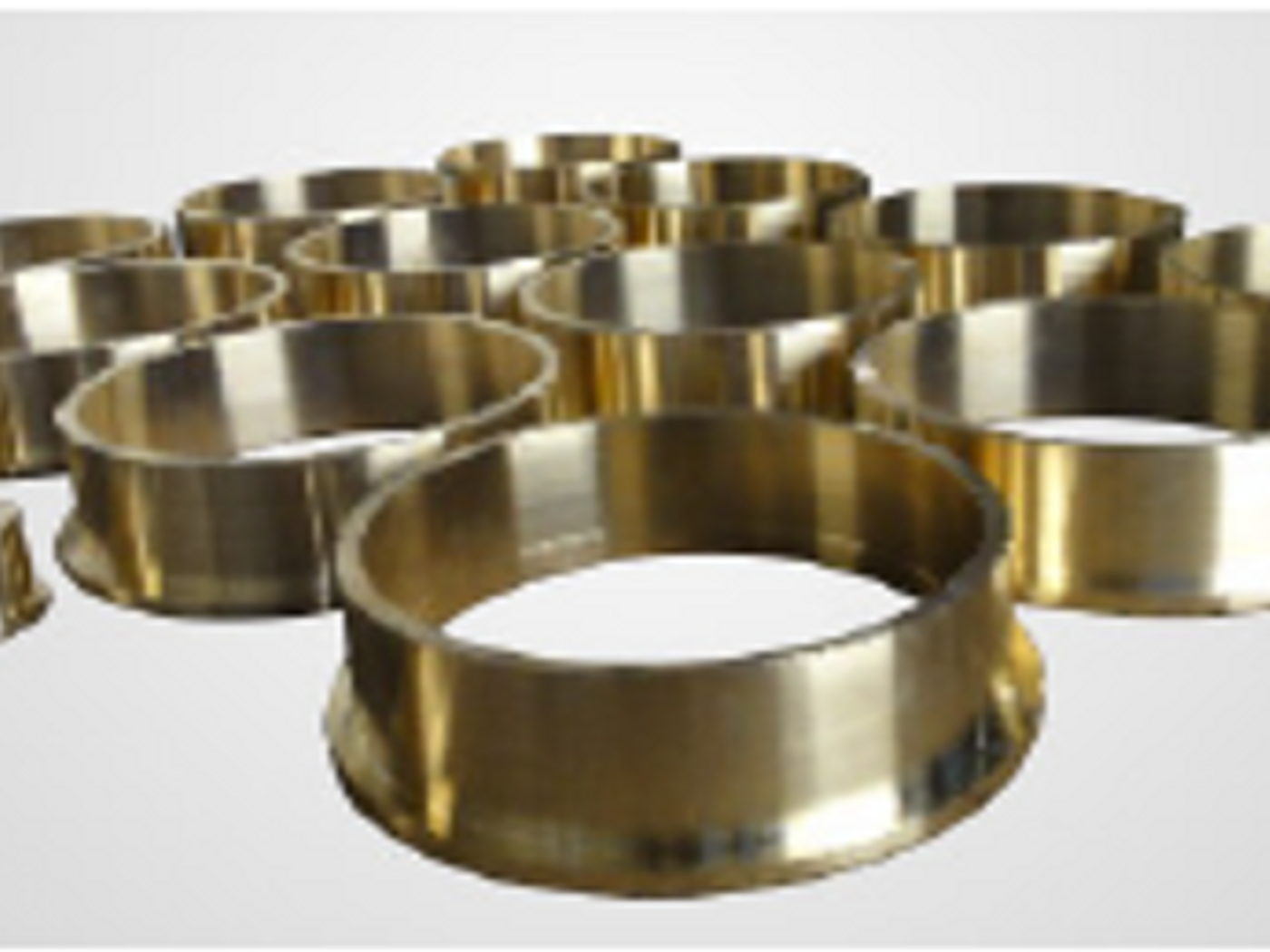
Chemical composition
| Copper | Remainder |
|---|---|
| Zinc | 22.0–28.0% |
| Aluminum | 5.0–7.5% |
| Manganese | 2.5–5.0% |
| Iron | 2.0–4.0% |
| Nickel | máx. 1.0% |
| Tin | máx. 0.2% |
| Lead | máx. 0.2% |
Mechanical properties
| Tensile strength | 760–820 MPa |
|---|---|
| Yield strength | 410–430 MPa |
| Elongation | 12–14 % |
| Rockwell B hardness | 90–94 |
| Compressive strength | 415–670 MPa |
| Density | 7.85 kg/dm³ |
Informational values. Vary by manufacturing process, geometry, and dimensions.
Formats
Typical applications
- Bushings and bearings
- Press nuts
- Bridge-crane components
- Stacker-reclaimer parts
- Hydraulic cylinders
- Cams
- High-strength supports
Manufacturing processes
- Forging
- Centrifugal casting
Aluminum bronze alloys
- BM 954
Aluminum-iron bronze with excellent balance between fatigue resistance, wear, and ductility — the family reference for structural parts and molds.
- BM 300
High-aluminum bronze (12.5–13.5%) with very high compressive strength, designed for guide bushings, wear plates, and operations without continuous lubrication.
- BM 959
BM 300 variant tuned for tube-forming, bending rollers, and similar non-impact operations.
- BM 380
Special ultra-hard alloy (36–40 HRC) with compressive strength up to 1,579 MPa for precision stamping dies and deep-drawing tooling.
- BM 340
Duplex-structure alloy (13.5–14% Al) with 1,230–1,351 MPa compressive strength, optimized for forming mandrels and drawing tools.